 Trusted Contractor Since

Toronto’s subway network is one of the city’s greatest assets. It connects neighbourhoods, reduces traffic, and helps millions of people get around every day. But if your home is close to an underground TTC subway line, you might be wondering how all that underground activity affects your foundation.
In a city with older homes, variable soil types, and an expanding transit system, even subtle ground movement matters. Everyday subway operations create low-level vibrations that can travel through soil and into building foundations. Over time, this vibration can influence the way a foundation behaves, especially if it is already compromised or poorly drained.
Understanding this helps homeowners protect their investment and take preventive action long before cracks appear.
Subway Vibration Happens and It Travels Through Soil
Subway trains generate ground-borne vibration every time they run. According to information from the Toronto Transit Commission, subway operations produce ground vibration that can be felt by people living adjacent to the tracks, especially in older portions of the system like Line 2 (Bloor-Danforth) where mitigation technology was not built into the original design. Residents often report perceivable movement, rattling windows, and rumbling sounds caused by vibration that travels through the ground and into nearby homes.
In addition to noise, vibration travels along the ground through soil layers and into structures. A detailed manual on transit vibration notes that soil and subsurface conditions strongly influence vibration transmission. Stiff clay soils, common in parts of Toronto, can allow vibration energy to propagate farther and affect buildings nearby.
How Ground Vibration Can Affect Structures
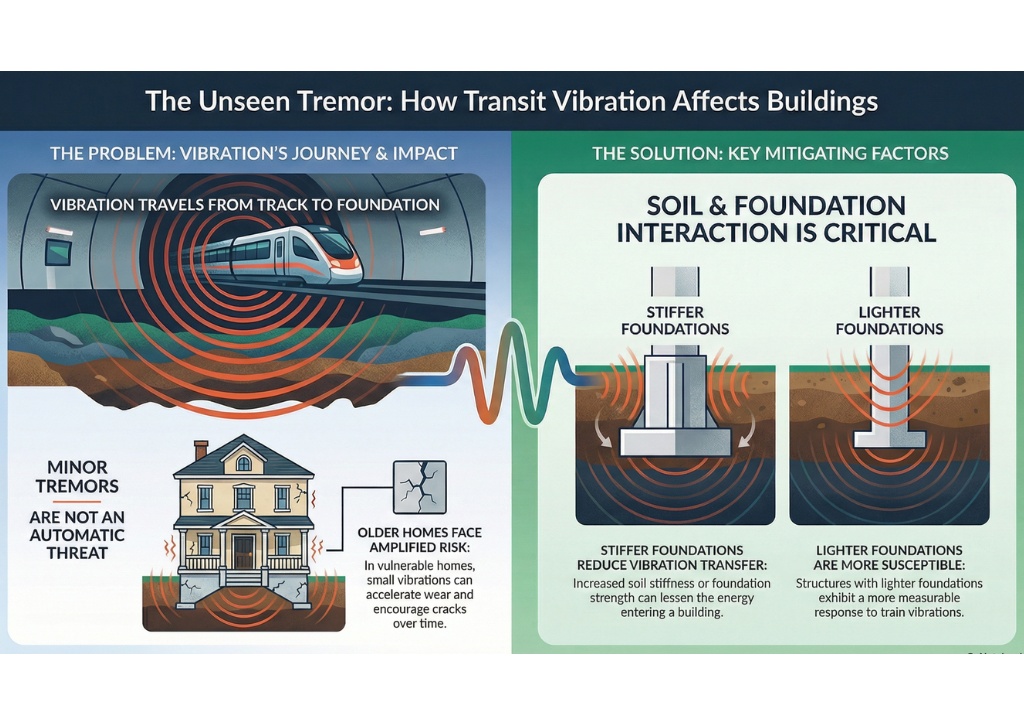
Seismic and engineering research shows that vibration generated by trains can move from the tunnel and track structure into a building’s foundation through soil. Studies reveal that the interaction between soil and structure has a significant effect on vibration response. Increased soil stiffness or foundation strength can help reduce the amount of vibration energy that enters the building, which can improve comfort and reduce long-term stress on structural elements.
Other academic research also points out that structures close to active transit lines exhibit measurable foundation responses due to train vibration. This is especially true for buildings with lighter foundations or those built on soil types that transmit vibration efficiently.
It is important to clarify that minor vibration from a subway does not automatically mean damage or structural failure. The level of vibration is often below thresholds associated with immediate harm. However, in older homes with existing moisture issues or foundation vulnerabilities, even small amplified vibrations can accelerate wear, encourage small cracks, or contribute to long-term settlement when combined with other stress factors.
Real Experiences From Toronto Homeowners
While formal studies help explain the mechanics of vibration, lived experience shows that people do feel or hear subway activity in certain homes. Discussions among local residents confirm that vibration and low rumble noises from the subway are noticeable, especially in basements or houses directly above or beside the tunnel path.
These accounts align with what engineers understand about ground-borne vibration: it varies by soil conditions, building construction, foundation type, and distance from the track. Some homeowners barely notice it, while others feel vibration more strongly in specific parts of their house.
So What Does This Mean for Your Home’s Foundation?
There are several ways subway-related vibration can influence your foundation over time:
-
Cumulative Stress on Weak Areas
A foundation already compromised by moisture or poor drainage can be more sensitive to vibration. Periodic vibration may exacerbate existing cracks or weakness. -
Soil Movement Interactions
The dynamic interaction between soil and vibration can affect settlement patterns. For example, clay soils common in parts of Toronto are known to transmit vibration more effectively, increasing the movement seen at the foundation level. -
Perception Versus Structural Impact
Most measured vibration levels from subways are not considered high enough to directly cause severe structural failures on their own. However, vibration can contribute to discomfort or noise issues, and it becomes more concerning when combined with water pressure, freeze-thaw cycles, or drainage problems.
This is why foundations near transit lines benefit from regular monitoring and maintenance. Small preventive measures can go a long way toward preserving structural integrity.
What Homeowners Should Do
If your home is near a TTC subway line, especially in older neighbourhoods like Bloor West, Danforth, or near Yonge Street, here’s how you can protect your foundation:
1. Regular Foundation Inspections
Schedule periodic inspections with a qualified basement and structural specialist. Early detection of cracks, settling, or moisture paths helps intervene before problems grow.
2. Address Moisture and Drainage
Water pressure against your foundation is one of the biggest threats to long-term stability. Modern basement waterproofing systems combined with proper drainage guards against hydrostatic pressure that can exacerbate foundation stress.
Learn more about how professional waterproofing protects your home.
3. Reinforce Vulnerable Foundations
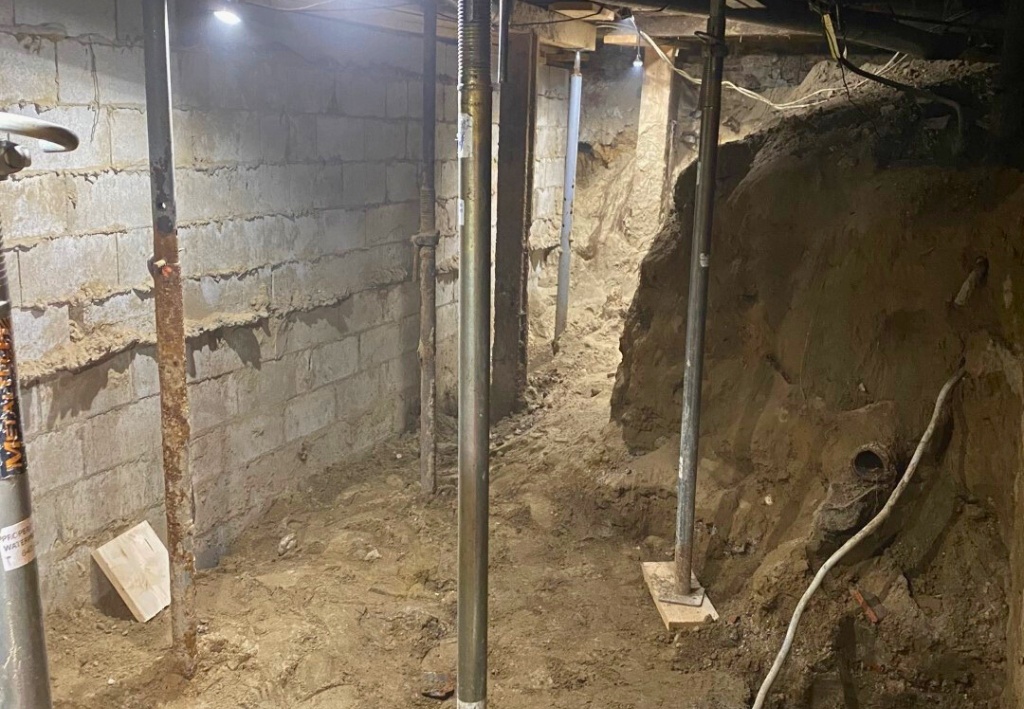
If your home shows signs of settlement, cracks, or uneven floors, foundation underpinning can provide long-lasting support and resistance against subtle vibration and soil movement.
You can explore our foundation underpinning services for homes in Toronto.
4. Improve Soil and Lot Conditions
Proper grading, downspout extensions, and soil stabilization help reduce moisture buildup around a foundation. A stable soil profile reduces the potential for vibration to have a significant effect.
When You Might Need Expert Guidance
Not every home near a subway line will face foundation stress, yet certain combinations increase the risk:
-
Homes with visible cracks or bulging walls
-
Older foundations without recent waterproofing
-
Basements that collect water after rain
-
Structures on clay or mixed soils known for transmitting vibration
A structural engineer or foundation expert can assess whether vibration is contributing to observed issues and recommend tailored solutions.
Living near a TTC subway line comes with many benefits, but it also brings unique environmental forces under the ground that are worth understanding. Subway trains generate ground-borne vibration that travels through soil and can be felt in nearby buildings. In most cases, this vibration is not harmful on its own, but in older homes with pre-existing foundation vulnerabilities or water problems, it adds a layer of stress that should not be ignored.
Combining regular inspections, good waterproofing, and targeted foundation reinforcement helps homeowners protect their investment. By staying proactive and addressing early warning signs, you can ensure your home remains stable and secure for years to come.
If you’re worried about foundation movement, cracks, or dampness near a transit line, contact IcyReno to schedule an inspection and get a foundation plan that’s built to last.